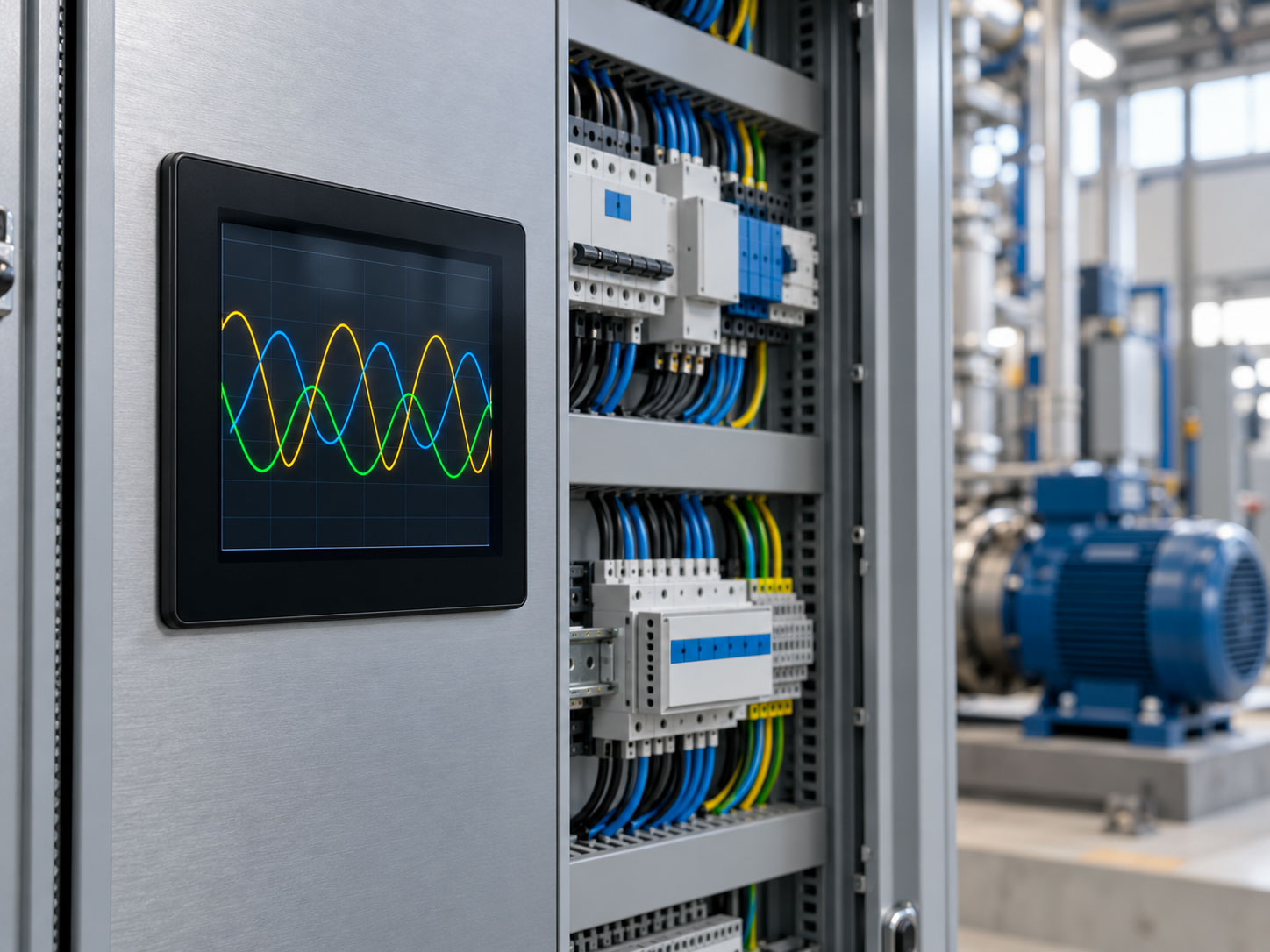
Measuring electrical voltage is a fundamental operation in any industrial plant, power distribution system, or electrical control panel. Properly monitoring voltage ensures the safe operation of equipment, prevents failures, and keeps the system’s operating conditions under control.
When voltage levels become high or when it is necessary to integrate measuring instruments into electrical panels, the direct use of measuring instruments can be complex or unsafe. In these cases, voltage transformers come into play, devices designed to reduce and adapt voltage values so that they can be safely measured by control instruments.
Voltage transformers are therefore an essential element in electrical measurement systems, especially in industrial plants where precision, reliability, and safety are essential requirements.
What are voltage transformers?
A voltage transformer, often also referred to as a voltage transformer, is an electromagnetic device designed to transform a high electrical voltage into a proportionally lower, easily measurable voltage.
The operating principle is the same as that of traditional transformers: through electromagnetic induction between the primary and secondary windings, the device reduces the voltage value while maintaining a precise proportionality between input and output.
In practice, the voltage transformer allows you to convert even a very high mains voltage into a standardized value, generally compatible with the measuring instruments present in electrical panels, such as analog or digital voltmeters, network analyzers and energy monitoring systems.
This conversion allows the instruments to operate in safe conditions without being directly exposed to the system voltage levels.
Why use a voltage transformer in electrical systems
The use of voltage transformers is not just a technical choice, but often represents a real operational necessity in industrial electrical systems and energy distribution systems.
One of the main advantages concerns the safety of measuring instruments. Instruments installed in electrical panels are generally designed to operate with standardized voltage values. Connecting them directly to high-voltage lines could compromise their operation or cause damage to the equipment.
The voltage transformer therefore acts as an interface between the electrical network and the measurement system, ensuring that the instruments receive a small, controlled electrical signal.
A second key aspect is measurement accuracy. Voltage transformers are designed to maintain an extremely accurate transformation ratio, allowing connected instruments to deliver reliable values even in complex industrial environments.
Finally, the use of these devices allows for the standardization of measurement systems, facilitating integration with analog instruments, digital instruments, and advanced energy monitoring systems.
Operating principle of voltage transformers
From a technical point of view, a voltage transformer consists of two main windings: the primary and the secondary.
The primary winding is connected directly to the circuit whose voltage you want to measure. The secondary winding, on the other hand, is connected to the measuring instrument, such as a voltmeter or a network analyzer.
Thanks to the phenomenon of electromagnetic induction, the voltage applied to the primary winding generates a magnetic field in the transformer core that induces a proportional voltage in the secondary winding. The ratio between the two voltages is defined by the device’s transformation ratio.
For example, a 20:1 ratio voltage transformer reduces a voltage of 2000 volts to a value of 100 volts on the secondary, allowing measuring instruments to operate without being directly exposed to system voltage levels.
This principle allows for precise and repeatable measurements even in the presence of high or variable voltages.
Applications in electrical panels and industrial plants
Voltage transformers find application in numerous industrial contexts where voltage measurement is a fundamental parameter for controlling the electrical system.
In electrical distribution panels, they are used to power panel measuring instruments, such as analog or digital voltmeters. This allows for constant monitoring of the voltage levels of the power lines.
In more complex industrial plants, these devices are integrated with energy supervision systems and network analyzers, which allow real-time monitoring of various electrical parameters such as voltage, frequency, power, and energy quality.
Their presence is also essential in electricity generation and distribution systems, where accurate voltage measurement is a key element in ensuring the stability and reliability of the entire system.
Precision and accuracy classes
A particularly important aspect of voltage transformers is the accuracy class. This parameter indicates the level of accuracy with which the device is able to maintain the ratio between primary and secondary voltage.
In industrial measurement systems, it is essential to use transformers with accuracy classes appropriate to the application, especially when the collected data is used for energy monitoring, automation, or process control systems.
The choice of the correct transformer must therefore take into account not only the nominal voltage of the system, but also the operating conditions, the type of connected instrumentation and the precision requirements of the measurement system.
The role of voltage transformers in energy monitoring
As industrial systems evolve towards models increasingly oriented towards energy efficiency and the digitalization of systems, the role of voltage transformers has become even more important.
These devices provide reliable data to energy monitoring systems, enabling companies to analyze electricity consumption, identify any anomalies, and optimize system operation.
In many industrial settings, accurate voltage measurement is one of the first steps in implementing advanced energy management strategies, improving operational efficiency, and reducing energy-related costs.
For this reason, the choice of quality voltage transformers designed for industrial applications becomes a strategic element within electrical measurement systems.
Frequently Asked Questions about Voltage Transformers
When is it necessary to use a voltage transformer instead of connecting the voltmeter directly?
A voltage transformer becomes necessary when the voltage of the circuit being measured exceeds the operating limits of the measuring instrument or when the instrument needs to be electrically isolated from the power line. Using a voltage transformer allows the voltage to be reduced to a standard level while maintaining operational safety and measurement accuracy.
What is the difference between a voltage transformer and a current transformer?
A voltage transformer is designed to reduce and adjust electrical voltage, while a current transformer is used to reduce electrical current so it can be measured by control instruments. Both are used in industrial electrical measurement systems, but they operate on different quantities: the former on voltage and the latter on current.
How do you choose the transformation ratio of a voltage transformer?
The transformer ratio must be chosen based on the nominal voltage of the primary circuit and the nominal voltage required by the measuring instruments connected to the secondary. Industrial measuring instruments typically operate with standard voltages such as 100 V or 110 V on the secondary, so the transformer is sized to transform the line voltage to a value compatible with the instrument.